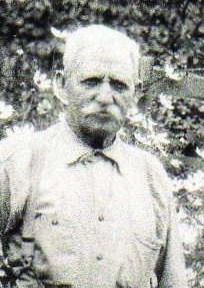
William A. Clark
- Andrew Olesky
- Jul 19, 2023
- 4 min read

At the base of Mingus Mountain in the Verde Valley of northern Arizona, one will find the quaint little town of Clarkdale. Home to less than 5,000 residents, most pass right by this little community on their way to the tourist town of Jerome, without giving it much thought. There are, throughout the town, reminders of the bygone days when Clarkdale was a booming copper mining town. At the turn of the twentieth century, the United Verde Mine, under the ownership of William Andrews Clark was one of the top copper producers in the country.

William A. Clark was one of the wealthiest men in the world at the time of his death in 1925. His estate in 1925 was estimated to be around $200 million, which is approximately $31 billion in today’s money. Yet, Clark never reached the level of popularity that Rockefeller or Carnegie boasted in the same era. Montana State University History Professor, Dr. Kieth Edgerton called Clark, “the most famous person no one has ever heard of.”[1] Much of what Clark is known for is his short-lived and controversial stint in the U.S. Senate. Clark however, was much more successful in the world of business than in Washington D.C.

William A. Clark, born in 1839 had meager beginnings. He taught school, worked in mines and traveled for much of his early years. It was his experience in mining where Clark made his fortune. He quickly invested his earnings in the railroad industry and opening mines. He settled in Montana but sought fortune anywhere that presented itself. In 1888, Clark bought the mine located in Jerome Arizona, after several other investors declined the opportunity. The mine would come to be known as the United Verde Mine. In the early years of the mine, Clark found little success. This had a lot to do with the decrease in value of copper. In 1894, Clark developed twenty-seven miles of railway from Clarkdale to the Chino Valley area.[2] These tracks remain in use to this day by the Verde Valley Railroad, a private tour company based out of Clarkdale. According to the Verde Valley Railroad website, the tracks took 700 men a year to complete.[3]
With the growth of the Verde Canyon Railroad beginning in the early twentieth century, and the growing manpower demanded by this growth, Clark had to establish a community to attract quality workers. In 1912, the same year that Arizona became a state, Clark moved his smelter downhill from Jerome. It was this location that he erected a community designed specifically for his workers. Clarkdale Historical Society’s official website calls it, “Arizona’s first company town.”[4] The goal of the town design was to show workers how well taken care of they were. As part of this design, Clark built the United Verde Hospital on Cleopatra Hill, at one of the highest points in Jerome. The building was large and its dramatic appearance was meant to show the workers how well taken care of they were. The building remains the most iconic structures of Jerome to this day, although it is no longer a state-of-the-art hospital but since 1994 operates as the Jerome Grand Hotel. Despite being one of the crown jewels of Clark’s community development, he did not live to see it’s opening in 1926. Clark passed away on March 2, 1925, at his New York City Mansion.
Clark’s business dealings made him one of the most successful, and wealthiest, entrepreneurs of the Gilded Age. However, money was not Clark’s only endeavor, he also sought political power. In 1890, William Clark made his first attempt to run for U.S. Senator, representing the state of Montana. At the time, Senators were not elected by popular vote, but they were elected by the state legislature. Clark’s 1890 run ended in a loss. He again ran for the Senate seat in 1899 and won. His opponent challenged the victory, and a Senate committee investigated the claim. In the end, it was determined that William Clark spent well over the $2,000 permitted by state law during his campaign. He was accused of bribery and denied his Senate seat.[5] This was most likely a contributing factor in the passing of the 17th Amendment to the U.S. Constitution, changing the election process for state Senators. In 1901, Clark was again elected to the Senate to fill the vacancy left by the death of Marcus Daly, and he served until 1907.

William Andrews Clark was one of the most successful businessmen of his day. The United Verde Mine alone was said to have produced a profit of $12,000,000 a year by the turn of the century.[6] He brought great success to northeastern Yavapai County, Arizona where the towns of Jerome and Clarkdale now stand. Modern day entrepreneurs, such as the owners of the Verde Canyon Railroad and the Jerome Grand Hotel, profit from the work of Clark. Although he is revered in the town that carries his name, he was not without enemies in his time. Famous author Mark Twain called William Clark, “as rotten a human being as can be found anywhere under the flag.”[7] Whether loved or hated, William A. Clark earned his title as “The Copper King.”
Bibliography:
[2] “Story of the United Verde” Retrieved on 7/16/2023 from http://docs.azgs.az.gov/OnlineAccessMineFiles/Pubs/2013-02-0386.pdf
[3] Propeck, Teresa. “The Little Engine that Did. Verde Canyon Railroad.” (May 12, 2014). Retrieved from https://verdecanyonrr.com/about-us/
[4] “Clarkdale Historical Society and Museum.” Retrieved on 7/16/23 from: https://clarkdalemuseum.org/
[5] “The Election Case of William A. Clark of Montana (1900)” Retrieved on 7/16/2023 from https://www.senate.gov/about/origins-foundations/electing-appointing-senators/contested-senate-elections/089William_Clark.htm
[6] Jerome, L.R. “The History of the United Verde: The Greatest Mine in the World.” Lost Angeles Herald. Volueme XXVIII, Number 195. (April 14, 1901) Retrieved from: https://cdnc.ucr.edu/?a=d&d=LAH19010414.2.354.33&e=-------en--20--1--txt-txIN--------
[7] Quoted in Mike Malone, The Battle for Butte: Mining and Politics on the Northern Frontier, 1864-1906 (Seattle: University of Washington Press, 1981), 199. and Edgerton, Keith. “William Clark, The Copper King.” (2014) Retrieved from: https://mtprof.msun.edu/Spr2014/edger.html

Comments