John Guadnola: a man who lived to serve others
- Andrew Olesky
- Mar 2, 2024
- 3 min read

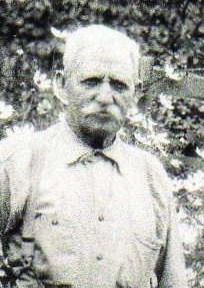
My great-grandfather, John Guadnola, was born in Grimaldi, Italy on June 24 or 25 to parents Antonio and Pottestio Guadnola. The year of his birth was most likely 1867, but some records show 1866.[1] He married Assunta Ruffolo on an unknown date, in 1897.[2] John and Assunta had 10 children who lived past infancy.
In (or around) 1898, John and Assunta left Italy and along with John's brother Joe, they sailed to San Paulo, Brazil. The couple's first three children were born in Brazil. Sometime between 1900 and 1902, John traveled from Brazil to the United States. He walked much of the way and would take rides when he could get them. He ended up taking this same route twice before ultimately moving his family in 1904. He spent some time in Colorado in the 1880s and chose to return to the state to settle down with his family.
John found work as a miner in Lake City, Colorado. The town at the time was rough, and John did not believe it was a safe place for a family to live. He set up a small home just outside the town, along the river. Assunta, fearful that one of her children would fall into the river, was known to tie rope around their waist as a tether to prevent accidental drowning.[3] John disliked working in the mines and told his children he did not want any of them to grow up to be miners. In 1905, the Guadnola family moved to Glenwood Springs, Colorado. John accepted work clearing rocks from what would become Interstate 70. He worked 12 hour shifts and earned $1 per day. 10¢ of each dollar had to be paid to the County Commissioner for the "privilege" of working.[4]

John had a large home garden and several chickens. During a 2013 interview with John's youngest daughter, she recalled that during the Great Depression, when she was just a little girl, her parents gave her vegetables and eggs to take around the neighborhood. She recalled being told not to take 1¢ from anyone, but to give freely to anyone who was in need.[5]
The Guadnola home was open for all who needed shelter and help. Every year, nuns would travel to Glenwood Springs to raise money for orphaned children. John and Assunta, lifelong Catholics, opened their homes to the nuns. John and his wife would sleep on the floor leaving their bed for the nuns. [6]
John passed away in 1948 at the age of 81. His wife, Assunta, passed away in 1962. This couple made a major impact on the state of Colorado and on Glenwood Springs. Several of their children would go on to raise families, including their daughter Esther, my grandmother. Other children earned law degrees, one became the Glenwood Springs Postmaster, one daughter became a nun, and their youngest daughter, Patsy, studied at Julliard in New York. Patsy had the opportunity to pursue a career as a professional singer, but instead chose to return to Glenwood Springs, care for her aging mother, and teach music to school children. Patsy also played organ at St. Stephens Catholic Church for a total of 72 years, interrupted only by her time at Julliard. Patsy, John's last surviving child, passed away in 2016. Later that same year she was inducted into the Colorado Italian American Hall of Fame.[7]

References:
[1] Guadnola family Registar of Births. Family collection.
[2]Kane, Willa. "Frontier Diary: Man Who Liked To Garden Set Roots in Glenwood." Post Independent. May 3, 2016. Retrieved from https://www.postindependent.com/opinion/columns/frontier-diary-man-who-liked-to-garden-set-roots-in-glenwood/
[3]Patsy Guadnola. Interviewed by Andrew Olesky, September 2013.
[4]Ibid.
[5]Ibid.
[6]Ibid.
[7]"Patsy Guadnola in CO Italian Hall of Fame." Post Independent. May 14, 2016. Retrieved from https://www.postindependent.com/news/local/patsy-guadnola-in-co-italian-hall-of-fame/


Comments